02 / Product & Service Design
Second Form
A furniture reuse system
A location-based platform that reframes discarded furniture as reusable parts people can discover, combine, and return to circulation.
Design question
How might a reuse platform help people see value in furniture that no longer works as a complete object?
01 / Context
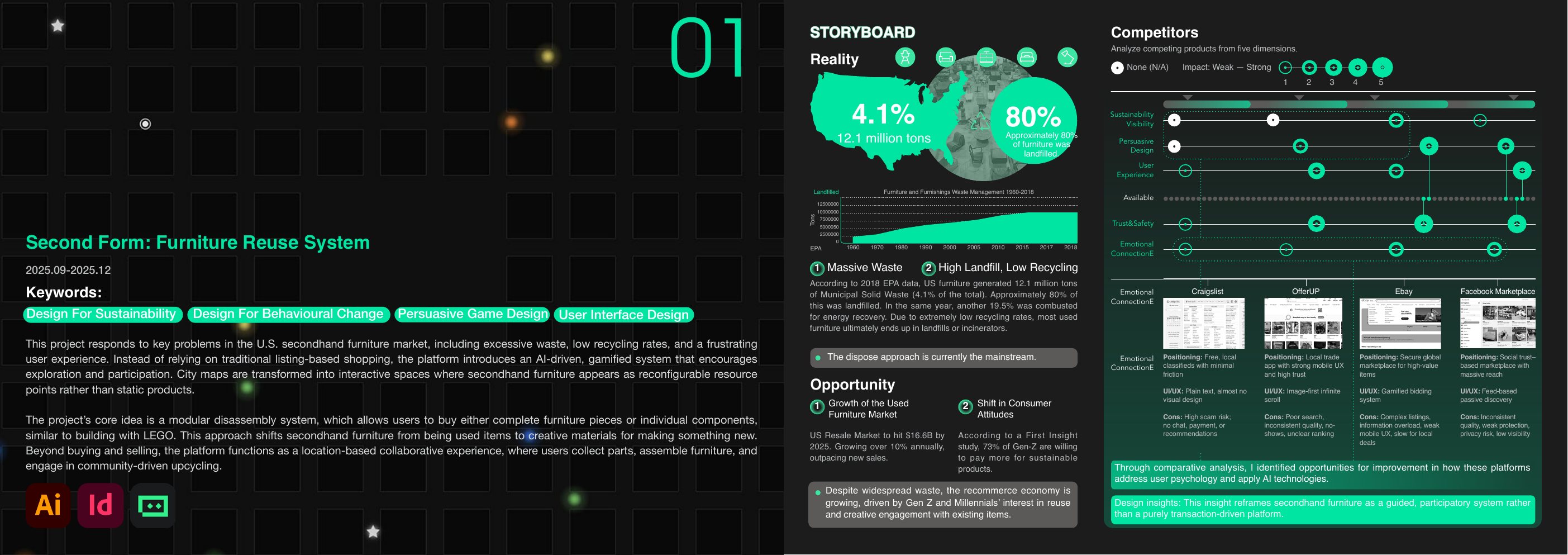
Furniture is often judged as useful or disposable
Existing disposal and resale systems usually treat furniture as a complete object. When an item is damaged, difficult to move, or hard to list, its remaining materials and components become difficult to see.
Second Form explores a different model: furniture can become a set of structural, surface, connector, and whole-object components with new possible uses.

02 / Design strategy
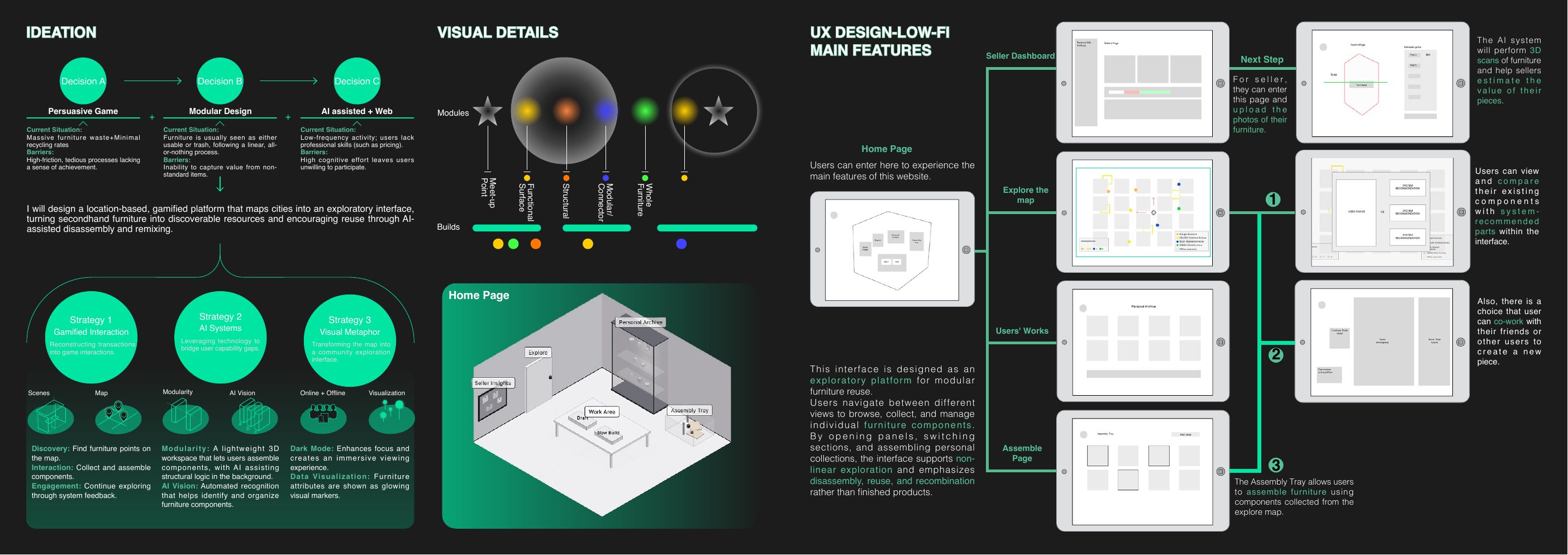
Turn reuse into exploration
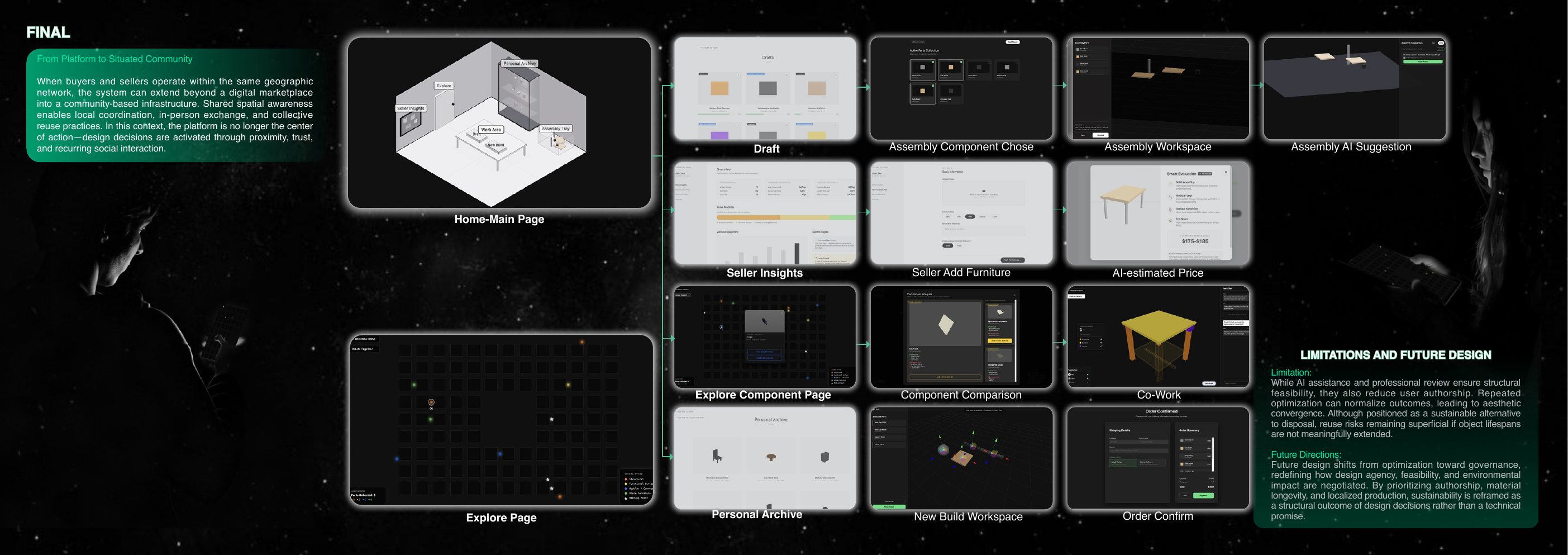
The concept combines a map-based discovery layer, modular furniture parts, and guided upload. Sellers document what they have. Buyers collect components and explore combinations in a lightweight assembly workspace.
AI is framed as assistance for recognition, organization, and compatibility. The user still reviews information and makes the final design decisions.
03 / System flow
Connect discovery, assembly, and handoff
The service blueprint follows the experience from local discovery through personal or collaborative assembly, confirmation, pickup, and archiving. The platform concept also accounts for sellers, logistics partners, community locations, and public-sector stakeholders.
Formative prototyping focused on whether people could understand modular reuse and move through the main seller and buyer tasks. Uncertain percentages and unverified outcome claims are intentionally excluded.

04 / Outcome
A circular product concept with open questions
The final prototype brings mapping, component comparison, assembly, collaboration, order confirmation, and a personal archive into one connected product system.
The concept still needs deeper validation around logistics, material safety, trust, AI transparency, and whether reuse meaningfully extends an object’s life. Those questions remain visible rather than being presented as solved outcomes.